
The Sustainable Transition: a Progress Update from Singapore – A perspective from Eloy Lindeijer
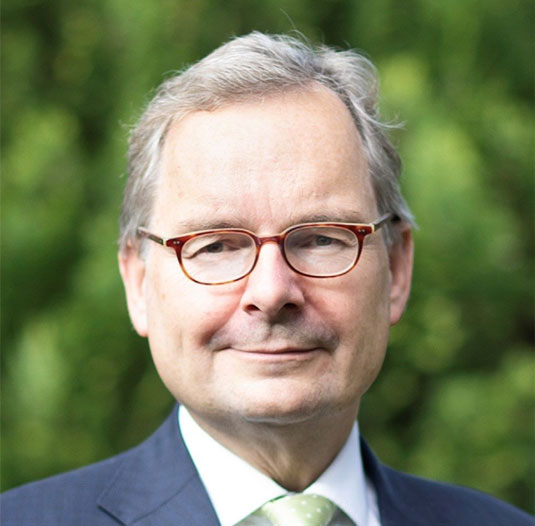
- Singapore’s progress in building a coordinated response on climate action warrants further attention from the global community.
- The city state has fostered a strong public-private partnership to ensure that its low-carbon transition policies manifest in concrete results.
- Singapore’s central bank, stock exchange, policy makers and investors have collaborated to elevate sustainable finance and climate transition to be a national priority.
On a visit to Singapore in October last year, I was struck by the city state’s leadership on sustainable development. Singapore has set in motion a nation-wide movement and Green Plan to advance its commitments under the UN Sustainable Development Agenda and Paris Agreement. Firm and tangible actions are being taken to tackle Singapore’s physical and economic vulnerabilities to climate change and restore nature into the urban environment. The approach is holistic, systematic and pragmatic, all at the same time.
Anyone following recent debate around sustainable investment would be forgiven for regarding climate transition across the global economy as a tale of two spheres: the United States, which has rolled out a new wave of incentives and subsidies through the Inflation Reduction Act (IRA), and Europe, where evolving regulatory frameworks are meeting roadblocks in their implementation.
However, more attention needs to be paid to Asia, where the implementation of climate transition is accelerating rapidly. Within Asia and globally, Singapore’s progress on this front should be noted.
At the recent launch of Singapore’s Sustainable and Green Finance Institute, Lawrence Wong, Deputy Prime Minister, Minister for Finance and Deputy Chairman of Singapore’s Monetary Authority (MAS), highlighted the nation’s strategic importance in achieving climate transition in Asia, whilst acknowledging its limitations: “We know that Asia is the key battleground in this war against climate change because [it] emits about half of global greenhouse gas emissions… Singapore’s own emissions are small but as a major financial centre for the region… We will do everything we can to advance the development of green finance in Asia.”1
Urgency has brought together Singapore’s public and private actors; facilitated coordination in policy mechanisms and economic levers; and channelled funding into R&D and innovation to ensure that its low-carbon strategy accelerates beyond ‘policies-on-a-page’ to transformation on the ground.
Forward-looking policies, public-private partnerships and coordination among major institutional actors have translated to collaborative action across the capital curve – from venture to infrastructure – reinforcing climate transition as a shared ambition across Singapore’s financial, economic and investor ecosystem.
Singapore has been mitigating the direct impacts of its geographic position – nearly a third (30%) of the city state is less than five metres above sea level – for decades via billions of dollars of investment in flood gates, sea-barrages, and land reclamation to counter the effects of erosion and flash floods.
In the face of rising sea levels, an increase in extreme weather events and other climate-driven ramifications for the nation’s economy, Singapore’s response to economic transition has evolved from a focus on mitigating the direct impacts of climate change, to offsetting broader, knock-on effects.
Singapore’s energy security has been a key focus of a coordinated response to these broader, knock-on effects. The government’s Green Energy Plan 2030 has accelerated the development of a diversified complex of solar, wind, gas pipelines, LNG terminals and climate technologies to secure a clean energy future for the nation, aiming to offset long-term emissions.
State-owned investor Temasek and Singapore’s sovereign wealth fund GIC are playing an important role in transitioning Singapore’s energy system. They are seeding initiatives and assuming the risk of early-stage technologies to accelerate and scale cleantech capabilities both at home and abroad.
Singapore’s shift to a more opportunity-driven posture – which is enabling follow-on capital commitments from a broader ecosystem of investors – provides a model for risk sharing that could be replicated by other sovereign wealth funds and public-private partnerships.
Having established a sustainable investment fund in 2020, which aims to accelerate sustainability integration across all asset classes, GIC’s presence in the climate venture space now encompasses investments in new technologies – from green hydrogen and carbon capture to nuclear fusion. The group is actively engaging on the energy transition targets of investee companies and collaborating with MAS on policy development, creating an experience-driven feedback loop from investors on the ground directly into the monetary authority.
A McKinsey study recently estimated that US$3.1 trillion a year is needed to achieve net zero in Asia by 20502, a funding shortfall that cannot be met by public finance alone. GIC and Temasek’s model is plugging a critical gap in the funding of early-stage climate, clean and green technologies – a best-practice model that can inform the scaling of climate technologies far beyond Singapore.
Large scale public-private partnerships in Singapore are advancing the development of smart grids and Energy Storage Systems (ESS) needed to address the intermittent nature of solar energy. As part of the Research, Innovation and Enterprise initiative and the Enterprise Sustainability Program, the government also supports businesses in the development and commercialization of solutions in clean energy and the transition to a circular economy.
Importantly, close coordination of Singapore’s central bank, stock exchange, policy makers and investors has brought together key actors to harness the power of capital markets to elevate sustainable finance and climate transition to the level of national priority.
Stakeholders across the economy have been actively involved in reinforcing the strength of Singapore’s climate information architecture – combining data, disclosure, and taxonomy – in support of both strategy setting and implementation.
The Monetary Authority of Singapore (MAS) has adopted a multi-pronged approach towards sustainable finance and supervising how the financial sector manages ESG risks, supported by Singapore’s green taxonomy for financial institutions.
Part of MAS’s strategy has focused on advancing Singapore as a hub for green bonds, carbon trading and pricing, leveraging its existing position as one of Asia’s most important financial centres. To that end, in August 2022, the government’s issuance of the world’s first 50-year green sovereign bond – designed to finance green public infrastructure projects – set an example for peers in the APAC region and beyond.
MAS has also collaborated with Singapore’s Stock Exchange (SGX) to launch ESGenome, a digital disclosure portal for ESG data. Since 1 January 2022, all listed businesses in Singapore have been required to provide climate reporting on a comply-or-explain basis. From 2023, this requirement became mandatory for all listed entities in the financial, energy, agriculture, food and forestry sectors, with materials, construction and transportation sectors falling under the remit for mandatory reporting from next year. The disclosures are based on the recommendations of the Task Force on Climate-related Financial Disclosures (TCFD) that Singapore helped shape though its vice-chair role at the TCFD.
Singapore’s role as a key financial centre has made it a natural leader to catalyse climate transition across the APAC region. By addressing its own climate vulnerabilities – tackling a range of acute and transition risks presented by climate change, investing into disaster resilient infrastructure and early-stage climate technology, and setting up a green taxonomy to guide public and private financing towards energy transition goals – Singapore is creating a nexus of climate action. The close coordination of key stakeholders across Singapore’s economy, from the central bank, stock exchange, policy makers to investors, is driving an implementation-led agenda which can – and should – influence the global discussion on financing the climate transition.
1 Speech by Mr Lawrence Wong, Deputy Prime Minister and Minister for Finance, and Deputy Chairman of MAS, at the Official Launch of the Sustainable and Green Finance Institute (SGFIN) on 20 April 2023, accessed at: https://www.mas.gov.sg/news/speeches/2023/official-launch-of-sgfin
2 McKinsey, Asia’s net-zero transition: Opportunity and risk amid climate action, accessed at: https://www.mckinsey.com/featured-insights/future-of-asia/asias-net-zero-transition-opportunity-and-risk-amid-climate-action#:~:text=In%20the%20Net%20Zero%202050,significant%20variation%20among%20individual%20countries.
Related Insights
-
MAY 2025
 Quality Businesses & Management in JapanLearn more

-
MARCH 2025
 Q&A: Rava Partners’ Joe Gagnon and Carl Ge on why Asia Pacific is the next fertile ground in the hunt for assets, returnsLearn more
IREI
-
MARCH 2025
 Véronique Pauwels: Cultivating Versuni’s legacy of innovationLearn more
-
DECEMBER 2024
 India: Emergence of the Digital Payments PowerhouseLearn more
-
NOVEMBER 2024
 Corporate Governance Reforms are enhancing Japan’s Appeal to InvestorsLearn more
-
NOVEMBER 2024
 Cultivating a Performance culture: In conversation with Samuel Wenger, COO of On RunningLearn more
-
OCTOBER 2024
 The Age of India: Demographic tailwinds in a Rising Superpower – A Perspective from Shirish ApteLearn more
-
SEPTEMBER 2024
 Building a DPM company in the era of hyper-specialization: In conversation with the co-Founders of NovareteLearn more
-
JUNE 2024
 Following the TalentLearn more
-
MARCH 2024
 Resilience to Rally: What Tennis Teaches Us About Business Potential TodayLearn more
FCLT
-
FEBRUARY 2024
 Hillhouse Sees Opportunities in Power Generation, Transport in Climate SectorLearn more
The Korea Times
-
DECEMBER 2023
 The Best Companies are Built in Challenging TimesLearn more
-
NOVEMBER 2023
 Mark Wiseman on the Illiquidity Premium of Private EquityLearn more
-
NOVEMBER 2023
 Hillhouse on “Winning the Loser’s Game” in Private EquityLearn more
-
NOVEMBER 2023
 Hillhouse Chief Predicts ‘Greatest Companies’ Emerging from AsiaLearn more
Bloomberg
-
OCTOBER 2023
 The Challenges to Long-termism in Global InvestmentLearn more
-
AUGUST 2023
 Theresa Whitmarsh on the Private Equity ToolkitLearn more
-
JUNE 2023
 The Next Phase of Private Equity for Institutional InvestorsLearn more
-
FEBRUARY 2023
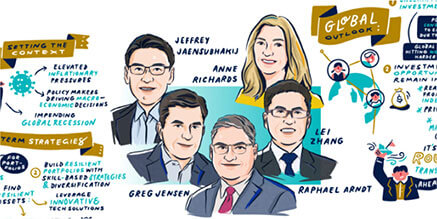 The Global Macro TransitionLearn more
GIC
-
NOVEMBER 2020
 Hillhouse on the Largest COVID-19 Impacts on BusinessLearn more
GIC
-
JANUARY 2015
 Perspectives on The Long TermLearn more
FCLT